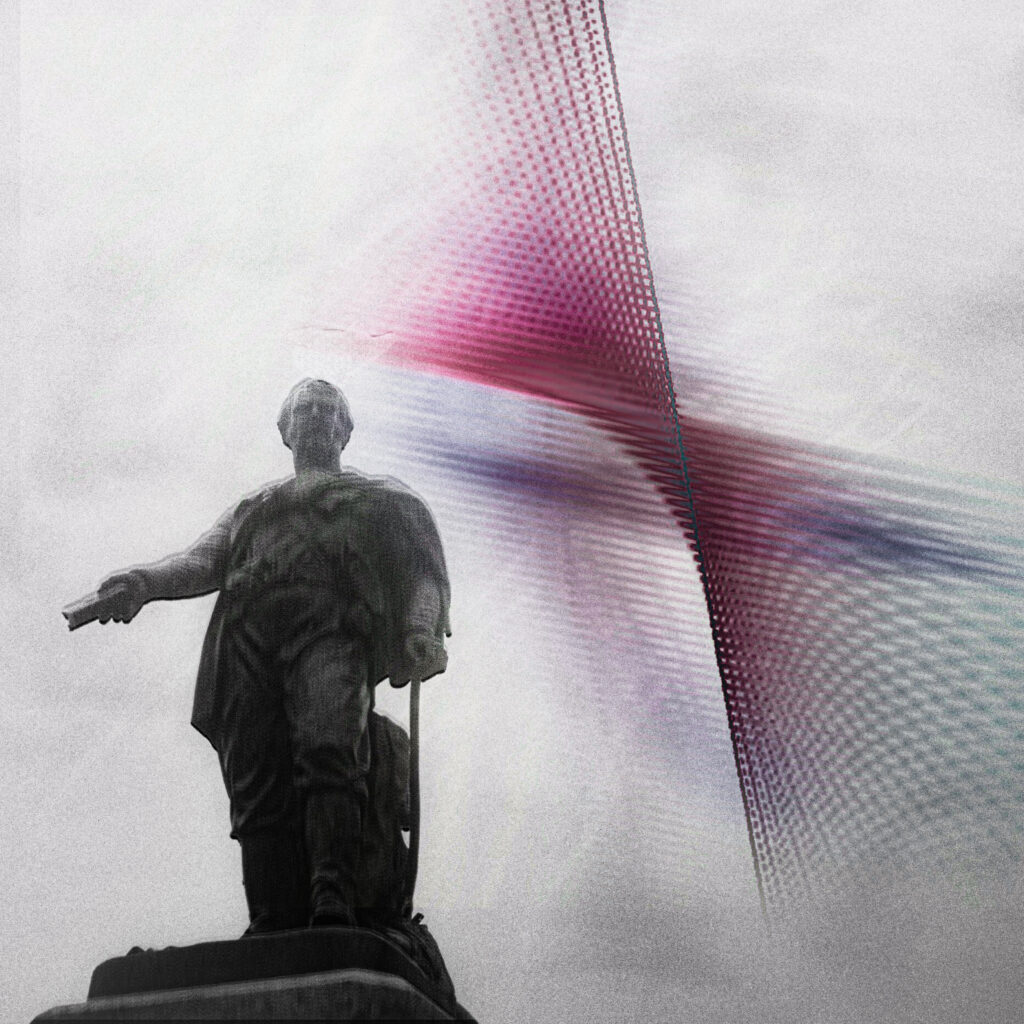
Deus Absconditus – Hidden God
Description
The narration in these pieces is beautifully performed by Charlotte Wilding Jones and Noah Buck.
The inspiration and subject matter for these pieces of music that I have created is the science fiction novel: Valis by Philip.K.Dick. In the story, the book deals with the main character Horselover Fat’s frantic theological hunt for the keys to help him understand why he and the people around him must go through so much pain and suffering in their life. He goes experiences many typical symptoms of schizophrenia and throughout the book; what is real in the world in the world around him, is subject to questioning from the narrator and fat.
“VALIS is a theological detective story, in which God is both a missing person and the perpetrator of the ultimate crime.”
I created scoring for these narrated sections as if I were creating scoring for a film and this book was the subject matter. Each piece works on its own as a short story and overall, they tell a version of the narrative from the book that intends to highlight the main themes that interested me most from the book being: The nature of existence, Pain and Suffering, Sanity, Psychedelic Drug hallucinations and Deus absconditus (Latin for a hidden god).
The music I created in these pieces blend acoustic and electronic elements, this is of course very standard for the contemporary film scoring sound that I wish to achieve with my compositions but with this specific choice of instrumentation I wanted to signify a contrast of ‘humanity’ with the acoustic elements like the voice and piano and the(quote) ‘synthetic nature of life’ with these harsh electronic elements. My music is created in a way to represent the constant battle that is happening within Fat’s mind and his progression with insanity throughout the narrative arc.
Structurally, the pieces are ordered to reflect a psychological and emotional journey rather than a strictly linear retelling of the novel. The earlier pieces sit in a space of unease and searching, musically restrained, with the narration carrying much of the weight. As the sequence progresses, the electronic elements become more dominant and distorted, mirroring Fat’s deteriorating grip on reality and the increasingly hallucinatory nature of his experiences. This arc was important to me because it meant the project could function as a complete listening experience with its own momentum and shape, rather than a collection of loosely related pieces.
Charlotte and Noah’s contrasting voices allow for a subtle doubling of perspective, they give different facets of the same fractured consciousness, they feel like an internal dialogue between Fat and the narrator who observes him. This ambiguity felt true to the spirit of Dick’s novel, in which the line between author, character, and unreliable witness is never quite stable.
Context
My final project is a music and sound composition built around spoken word narration. Rather than being a soundtrack to something visual, it exists as its own standalone audio work where the narration, music and sound design are all working together as equal parts of the same thing. The works I’m going to talk about here have all played a role in shaping how I’ve thought about that.
The most obvious and direct reference point is Jóhann Jóhannsson and Yair Elazar Glotman’s Last and First Men (2020), an hour-long film based on Olaf Stapledon’s 1930 science fiction novel. The narration here isn’t constant, it works more like bookends around these extended musical movements, and slowly these big ideas about planetary fate, deep time and cosmic scale just build up around you. In an interview about the film, Glotman describes the whole thing as a kind of three-line counterpoint, the narration, the music and the visuals each being their own independent line that supports the others but could also be followed on its own. That’s honestly the best way I’ve found of describing what I want my own project to do. The difference is that I’ve removed the visual line entirely, which means the narration and the music have to do all of that work between just the two of them.
Thematically it shares a lot with what I’m doing too, though my narration comes from a human perspective rather than an alien one, so it feels a bit more grounded and personal.
Max Richter’s Voices (2020) uses a similar structural approach, with narration drawn from the 1948 Universal Declaration of Human Rights acting as bookends around the music, with found vocal recordings scattered throughout in all kinds of different languages. What’s most interesting to me about this one is how Richter pushes the human voice beyond just narration, it becomes part of the music itself through choral elements, which really strengthens the central theme. That said, my project deliberately moves away from Richter’s very ambient, repetitive sound world. There’s a real risk with spoken word music that you just end up making sombre drones and calling it a day, and I didn’t want that. I want this to actually show range: dynamic shifts, rhythmic energy, distinct movements. The narration should be holding the structure together, not limiting what the music can do.
Nils Frahm has been a big influence in terms of how you can blend acoustic and electronic elements without one swallowing the other, that ability to go from something really intimate to something enormous within the same piece is something I’ve been actively chasing in my own arrangements.
Ben Salisbury and Geoff Barrow’s scores for Ex Machina and Annihilation sit at the harsher, more unsettling end of what I’m going for. The way they use dissonance and synthetic texture to evoke something vast, and unknowable has fed directly into how I’ve approached the sound design, especially in the sections that deal most with mortality and the coldness of deep time.
All of these works together sort of map out the territory my project is sitting in but also the places where I’m deliberately doing something different.